Roots of Resilience: How Sensor-Driven Soil Technology at Fujairah Research Centre is Saving the UAE's Native Ghaf and Sidr Trees
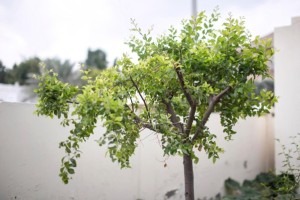
While much of the UAE's conversation about sustainability is cantered around desalination and indoor vertical gardens, another, subtler, more insidious problem is taking place in the wild: the country's iconic native trees the Ghaf (Prosopis cineraria) and Sidr (Ziziphus spina-christi) they are being lost at an alarming rate because of urban sprawl, overgrazing, and the depletion of groundwater, and these trees are not just plants, but the ecological and cultural lifeblood of the Emirates, offering shade, stabilizing the sand dunes, attracting insects and birds, and embodying the essence of patience and survival. The Fujairah Research Centre (FRC) is taking a ground-breaking approach with a technology-driven strategy to combat the depletion of these native species and prevent further damage to the trees by inspecting the trees in real time through soil sensors and implementing precision conservation methods. In the UAE desert, if a Ghaf or Sidr tree starts to die, the signs are almost always not visible above the ground until the roots of the tree have completely failed, and most of the traditional monitoring is done by walking to a tree once a week, inserting a manual probe and recording a single data point; but this is fundamentally wrong because desert soil conditions evolve on a daily basis, let alone once weekly. In our Native Plant Conservation & Restoration project at Fujairah Research Centre, we are installing a network of Internet of Things (IoT) based soil sensors in pilot conservation sites in the Wadi Wurayah area and other desert locations, and these sensors, embedded at depths of 10, 30 and 60 centimetres, continuously measure three important soil parameters: volumetric water content (VWC), electrical conductivity (EC) as an indicator of soil salinity, and soil temperature, and each sensor automatically transmits these data to a central cloud-based platform, where algorithms interpret the data and issue automated alerts when soil parameters values are outside of the safe range for each tree species and age class. The uniqueness of this research is that we are not just installing commercial sensors and reading numbers, but we are calibrating them particularly for the UAE's hyper-arid sandy soils which are very different to agricultural soils in temperate climates and where a single irrigation event could be recorded as 'wet' for only a few hours before returning to 'dry', which would trigger false alarms every day and make the system unusable for any real conservation work. This data is not simply sitting on a computer screen, it's actually influencing smarter preservation actions, starting with a new way of delivering water to trees that is more precise than watering an entire area on a programmed schedule, and in a pilot project on 50 Ghaf trees, this new method of water delivery reduced water use by more than 65% while increasing tree health scores. The long-term data also enables us to create predictive stress models that, based on weather forecasts, soil moisture depletion rates and other factors, will give us an early warning of which trees are likely to be experiencing critical drought conditions, allowing us to take action proactively, whether by irrigating or providing shade cover, before visible signs of stress are seen, rather than waiting for them. The value of conserving Ghaf and Sidr extends beyond the conservation itself to the role they play in ensuring food security, supporting the sustainability of desert agriculture, and in the UAE, as part of the cultural identity as well. Ghaf trees fix nitrogen in the atmosphere through their root nodules and this nitrogen enriches the otherwise barren desert soil, consequently, other plants grow in its shade, including wild forage species for camels and goats; and Sidr trees produce a highly valuable fruit, and their flowers are the main source of high-quality native bee honey (Apis mellifera jemenitica) conserving these species is conserving a future honey harvest, a shade source for livestock and a piece of Emirati heritage. The Fujairah Research Centre is a living laboratory, where technology meets tradition, and as we continue to expand our sensor network from 50 trees to 500 trees across multiple sites in Fujairah, we are discovering the answers to the UAE's environmental challenges are often just beneath the surface, waiting to be measured, understood, and acted upon, ensuring that native UAE trees are not relics of a bygone era but cornerstones of a sustainable, climate-resilient future.